
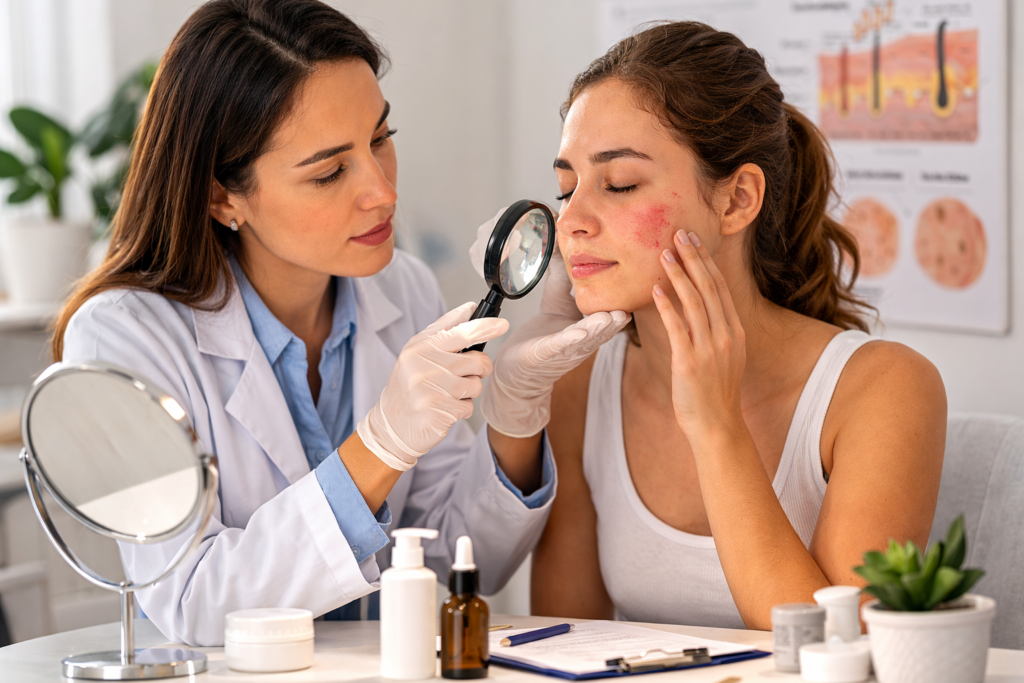
The majority of people initially attempt to treat skin issues on their own. A fresh face wash, some natural cures, and perhaps a few over-the-counter products can occasionally be effective.
However, skin problems don’t usually go away so quickly.
The largest organ in your body, your skin frequently sends out signals when anything is wrong. The issue is that a lot of people wait months or even years to consult a specialist after ignoring those early warning indicators.
You can avoid long-term harm and more difficult treatments in the future by knowing when to see a dermatologist.
Here are some typical indicators that your skin might benefit more from expert dermatological care than from at-home remedies
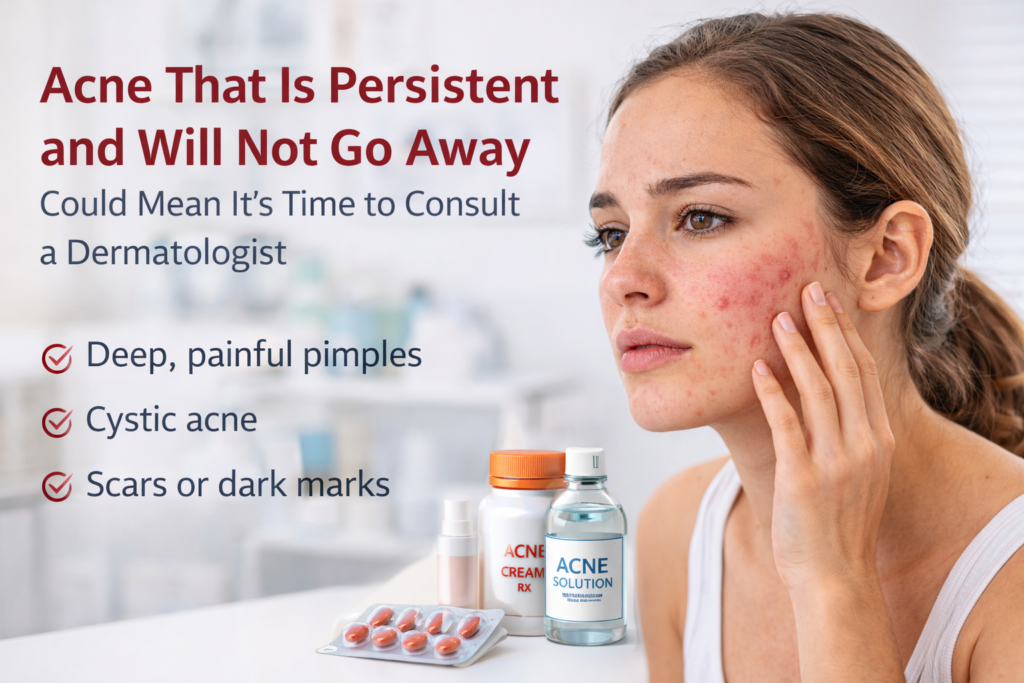
Acne That Is Persistent and Will Not Go Away
One of the most prevalent skin conditions, particularly among teens and young adults, is acne. Basic skincare solutions are generally sufficient to handle mild outbreaks.
But if acne becomes severe, painful, or chronic, it might need to be treated medically.
If you observe:
deep, painful pimples
Cystic acne
Scars or dark markings left by acne
breakouts that don’t go away after several months of therapy
Seeing a dermatologist might be necessary. They can suggest specialist treatments or prescription drugs that aren’t available over-the-counter.
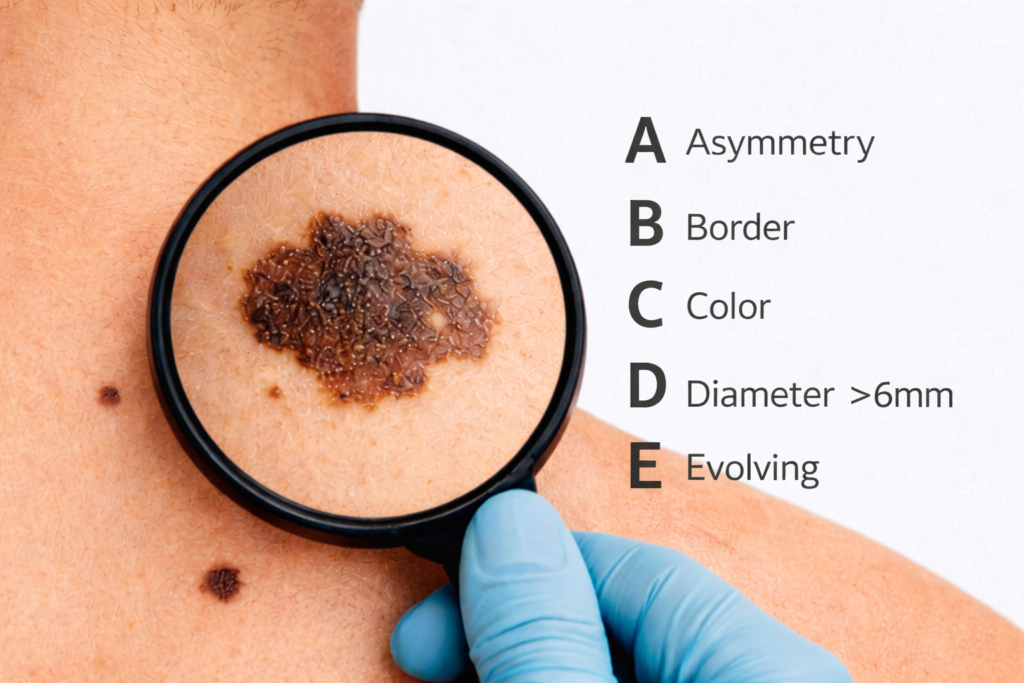
Sudden changes in moles or skin spots
The majority of people have little patches or moles on their skin. These are usually not harmful.
However, a mole should not be ignored if it begins to change in size, color, or shape.
Dermatologists frequently advise keeping an eye out for the ABCDE indicators of concerning moles:
A: Asymmetry: the mismatch between the two sides
B: Blurry or uneven borders
C: irregular tones of red, black, or brown
D: Diameter: more than around 6 mm
E-Evolving: any discernible shift over time
Although a shifting mole does not always indicate skin cancer, it should be examined by a specialist.
Rashes on the skin that cannot be explained
Allergies, infections, skincare product responses, and even internal health problems all cause rashes.
Occasionally, minor rashes could disappear in a few days. However, if a rash
spreads swiftly
becomes itchy or uncomfortable
lasts more than seven days.
continues to return
then a professional assessment could be required.
Rather than depending on experimentation, a dermatologist can pinpoint the precise problem and suggest the best course of action.
Extreme Dryness or Peeling of the Skin
Dry skin is typical, particularly in arid regions or during the winter. The issue is typically resolved by moisturizers.
However, excessive dryness that continues or is followed by redness and irritation could be a sign of dermatitis, psoriasis, or eczema.
Focused treatment is often necessary to reduce inflammation and safeguard the skin barrier in these conditions.
Neglecting them for too long can exacerbate the symptoms.
Sudden Hair Loss
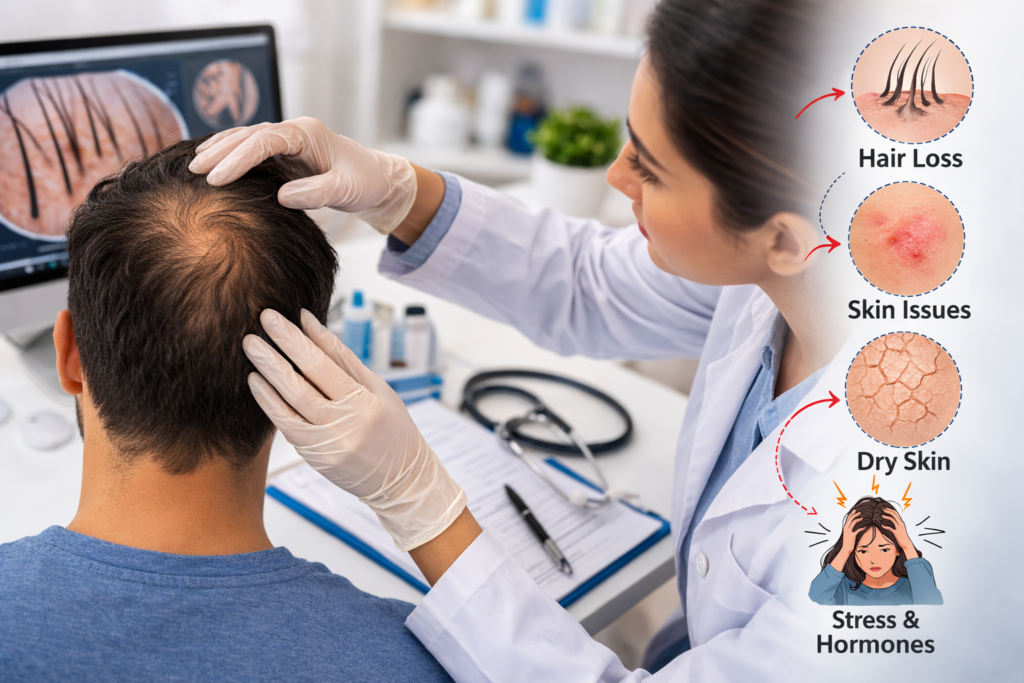
Genetics, stress, hormonal shifts, and certain medical conditions can all play a role in hair loss.
It’s normal to lose some hair every day. However, if you notice a lot of thinning, patches of hair loss, or shedding that’s more than usual, it might be a sign of a medical issue that needs to be looked at.
Dermatologists are experts in skin, hair, and scalp issues. Catching problems early on significantly boosts the likelihood of effective treatment.
Genetics, stress, hormonal shifts, and certain medical conditions can all play a role in hair loss.
It’s normal to lose some hair every day. However, if you notice a lot of thinning, patches of hair loss, or shedding that’s more than usual, it might be a sign of a medical issue that needs to be looked at.
Dermatologists are experts in skin, hair, and scalp issues. Catching problems early on significantly boosts the likelihood of effective treatment.
Skin Infections That Don't Go Away
Insect bites, minor cuts, and pimples typically heal in a few days.
If a skin lesion is more painful, puffy, or pus-filled, or if it simply won’t go away, there may be an infection.
Here are some signs that an infection might be present:
spreading redness
warmth near the affected area
swelling that doesn’t go away
discharge or pus
If the infection worsens, professional medical attention could be required.
Skin Sensitivity or Irritation
Your skin might suddenly react to products that never bothered you before.
If your skin becomes very sensitive, burns, stings, or often turns red, it could indicate an underlying skin problem or damage to the skin’s protective layer.
A dermatologist can help figure out if allergies, inflammation, or a more serious skin condition is causing the issue.
When Is It Appropriate to See a Dermatologist?
While many skin issues can be resolved at home, other signs shouldn’t be ignored.
You need to think about seeing a dermatologist if
When a skin issue persists for more than a few weeks
The symptoms are becoming more severe.
Over-the-counter medications are ineffective.
A spot or mole can appear in various ways.
You have severe acne or inexplicable rashes.
Treatment is frequently simpler and more successful when diagnosed early.
Concluding remarks.
Your skin often reflects the inside workings of your body. Unusual or persistent symptoms may point to a problem that needs medical attention, even when small problems are common.
Minor issues can be kept from becoming more serious by being aware of warning signals and consulting a licensed dermatologist.
If something doesn’t seem right, it’s always better to have your skin checked than to ignore it.
FREQUENTLY ASKED QUESTIONS
1. What are the common warning signs that your skin needs a dermatologist?
Persistent acne, unusual rashes, sudden hair loss, or changes in moles can signal skin problems.
If these symptoms last for weeks or keep getting worse, they should not be ignored.
A dermatologist can diagnose the issue early and provide the right treatment.
2. When should you see a dermatologist for acne?
You should see a dermatologist if acne becomes painful, cystic, or leaves scars.
Breakouts that do not improve after using skincare products for several months may need medical care.
Dermatologists can provide advanced treatments and prescription medications.
3. Why is it important to check changing moles or skin spots?
Changes in the size, color, or shape of a mole can sometimes indicate serious skin conditions.
Dermatologists recommend monitoring the ABCDE signs to identify risky moles.
Early detection helps prevent complications and ensures proper treatment.